
Maths Intent
We solve tasks and challenges to help us to work systematically and accurately in the wider world
-
The purpose of Mathematics at St Michael’s Primary School is to provide children with rich experiences, knowledge and the ability to work systematically and accurately in the wider world.
-
The confidence to approach a wide variety of challenges and tasks.
-
Children are provided with the opportunity to engage in hands-on learning when discovering new Mathematical concepts.
Maths Implementation
-
Across the school all year groups, from EYFS to Year 6, we follow White Rose as our chosen Maths scheme to provide children with practical, varied fluency and problem-solving skills.
-
Basic maths skills are practised daily using White Rose Flashback 4 activities, focusing on prior learning and basic arithmetic to ensure they are revised and embedded.
-
Children are given the opportunity to develop their problem-solving and reasoning skills through a variety of resources, question styles and formats.
-
Children are taught through targeted differentiation, small group work and mixed ability whole class lessons.
-
Lessons use a Concrete, Pictorial and Abstract approach to guide children through their understanding of Mathematical processes.
-
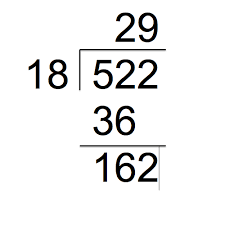
All teaching staff follow St Michael’s Primary School calculation policy to ensure consistent teaching strategies are followed. This allows children to continuously build upon knowledge learned in previous years.
-
Maths working walls display linked Maths vocabulary for children to become use a rich and varied Mathematical language.
-
Homework is set on MyMaths weekly to develop and review the learning that has taken place in class that term.
Maths Impact
As a result of the Maths teaching at St Michael’s Primary School, you will see:
-
Engaged children who are all challenged at all levels of learning and encouraged to reach their potential.
-
Confident children who can all talk about their learning in Maths and use Mathematical vocabulary and resources.
-
Different representations of Mathematical concepts.
-
Learning that is tracked and monitored through end of unit assessments.
-
All children are making good and consistent progress.